
If you are looking for niacinamide uses for skin, you are likely trying to understand what this popular skincare ingredient actually does, whether it suits your skin type, and how it can fit into a simple skincare routine. Niacinamide, also known as nicotinamide, is a form of vitamin B3 widely used in modern skincare products because of its potential to support the skin barrier, improve the appearance of uneven tone, reduce excess oil, and improve the look of some signs of skin aging.
Unlike aggressive treatments that may not suit everyone, niacinamide is generally considered a well-tolerated cosmetic ingredient. Research has investigated topical niacinamide for concerns including pigmentation, skin barrier function, acne-prone skin, texture, and visible signs of aging.
For women choosing skincare or professional beauty services in Lahore, understanding the ingredient before adding it to a routine can help make skincare decisions more informed and practical.

What Is Niacinamide?
Niacinamide is a water-soluble form of vitamin B3, also called nicotinamide. It is used in a variety of topical skincare formulations, including moisturizers, serums, creams, and other cosmetic products.
One reason niacinamide has become popular is that it has multiple potential roles rather than targeting only one cosmetic concern. Research suggests that topical niacinamide can support the skin barrier, help improve hydration, influence pigmentation processes, and contribute to improvements in the appearance of texture and signs of aging.
The ingredient should not be confused with niacin, another form of vitamin B3. Although both are forms of vitamin B3, they have different properties when applied to or used by the body.
Niacinamide Uses for Skin: What Can It Do?
The most useful way to understand niacinamide is to look at the different skin concerns it may help address.
1. Supports the Skin Barrier
One of the important niacinamide uses for skin is supporting the skin barrier.
The skin barrier is the outer protective layer of the skin. It helps reduce excessive water loss and protects the skin from environmental stressors. Research has associated topical niacinamide with improved barrier function and increased production of certain skin lipids, including ceramides.
A stronger skin barrier can be especially valuable for people whose skin feels dry, tight, rough, or easily irritated.
2. Helps Improve the Appearance of Uneven Skin Tone
Niacinamide is also frequently included in products designed for dull or uneven-looking skin.
Research into topical nicotinamide has found improvements in the appearance of hyperpigmented spots and overall skin clarity in some clinical studies. One review notes that topical formulations containing niacinamide have been studied for pigmentation and skin tone concerns.
It is important to keep expectations realistic. Niacinamide is not a guaranteed skin-lightening treatment, and results can differ depending on the individual’s skin, formulation, routine, and underlying cause of pigmentation.
3. May Help With Excess Oil
Another potential benefit is its relationship with sebum, the oily substance naturally produced by the skin.
DermNet reports that topical nicotinamide has been studied for reducing facial sebum production. This may make niacinamide-containing skincare interesting for people with oily or combination skin.
However, reducing oil does not mean that the skin should be completely stripped of its natural oils. A balanced routine should still include appropriate hydration and moisturization.
4. Can Be Useful for Acne-Prone Skin
Niacinamide has also been studied in relation to acne-prone skin because of its anti-inflammatory properties and potential effect on sebum.
A review of acne research found that topical nicotinamide may have benefits, although the evidence base is not as strong or extensive as that for some established first-line acne treatments.
For someone experiencing persistent, painful, or severe acne, skincare products should not replace professional medical evaluation. A dermatologist can determine whether acne requires a dedicated treatment plan.
5. Supports the Appearance of Aging Skin
Niacinamide is commonly found in skincare designed for mature or photoaged skin.
Clinical research has investigated topical niacinamide for visible concerns such as:
- Fine lines and wrinkles
- Uneven texture
- Hyperpigmented spots
- Red blotchiness
- Loss of overall skin smoothness
A controlled study using a 5% niacinamide formulation reported improvements in several visible signs of facial aging over a 12-week period.
This does not mean niacinamide can stop natural aging. Instead, it may help improve the appearance and condition of skin when used consistently as part of an appropriate skincare routine.

How Does Niacinamide Work?
Niacinamide participates in biological processes involving NAD and NADP, important coenzymes involved in cellular energy and other metabolic functions.
From a skincare perspective, research has linked topical niacinamide with several processes relevant to skin health, including supporting barrier function, influencing inflammatory responses, and affecting pigmentation pathways.
One particularly relevant effect is its relationship with the skin barrier. Niacinamide can support the production of skin lipids such as ceramides, which are important components of the outer layer of the skin.
This combination of effects helps explain why niacinamide appears in products designed for several different skin concerns.
Who Can Use Niacinamide?
Niacinamide is used across many skincare routines and may be suitable for a variety of skin types, including:
- Normal skin
- Dry skin
- Oily skin
- Combination skin
- Mature skin
- Uneven-looking skin
- Some acne-prone skin
However, suitability depends on the complete formulation and the individual’s skin condition.
Someone with very sensitive or compromised skin may need to introduce new products slowly. If a product causes persistent burning, swelling, severe redness, or significant irritation, stop using it and seek appropriate professional advice.
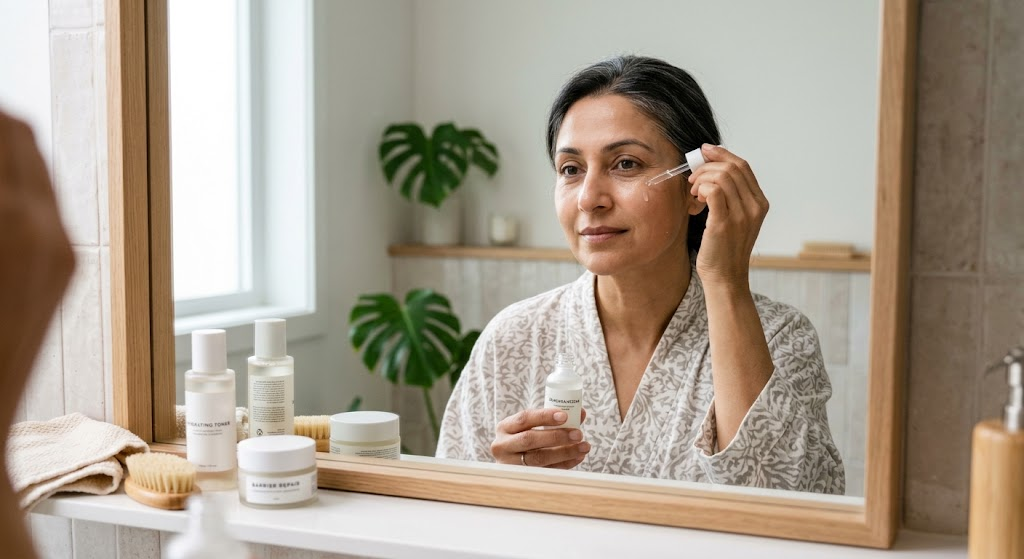
How to Add Niacinamide to a Skincare Routine
A simple routine is often better than using numerous active ingredients at the same time.
A basic routine might look like:
Morning
- Gentle cleanser
- Niacinamide serum or another niacinamide-containing product
- Moisturizer
- Broad-spectrum sunscreen
Evening
- Gentle cleanser
- Niacinamide product
- Moisturizer
The exact routine should depend on the person’s skin type and the other products being used.
Sunscreen remains particularly important when the goal is improving the appearance of uneven pigmentation or preventing additional sun-related skin changes. Niacinamide should not be considered a substitute for sun protection.
What Concentration of Niacinamide Is Best?
There is no single concentration that is ideal for everyone.
Niacinamide products are available in different strengths. Research has examined formulations at concentrations such as 2%, 4%, and 5%, depending on the intended use and formulation.
A higher percentage does not automatically mean better results.
People new to active skincare ingredients may prefer a straightforward, well-formulated product rather than immediately choosing the strongest concentration available. Skin tolerance, the complete formula, frequency of application, and consistency can all influence the experience.
Can Niacinamide Be Used Every Day?
Many people use topical niacinamide regularly, and it is generally considered a well-tolerated skincare ingredient.
However, daily use should still depend on the specific product and individual skin tolerance. If you are introducing niacinamide for the first time, applying it gradually can make it easier to determine how your skin responds.
If your routine already contains several strong active ingredients, adding another product at the same time may make it difficult to identify what is causing irritation.
Niacinamide and Other Skincare Ingredients
Niacinamide can appear alongside many other skincare ingredients.
Depending on the formulation and individual needs, it may be found in routines containing:
- Hyaluronic acid
- Ceramides
- Moisturizers
- Sunscreen
- Retinoids
- Antioxidants
- Other ingredients targeting uneven skin tone
The important point is not to build a complicated routine simply because several ingredients are popular.
A professional skincare assessment can help determine which products are actually appropriate for your skin concerns.
What to Consider Before Using Niacinamide
Although niacinamide is generally well tolerated, skincare is not one-size-fits-all.
Consider the following before introducing a new product:
Patch Test When Appropriate
Testing a new product on a small area can help you understand how your skin responds before applying it more widely.
Introduce One New Product at a Time
If several new products are introduced simultaneously and irritation develops, it becomes difficult to identify the cause.
Check the Complete Formula
Niacinamide is only one part of a skincare product. Other ingredients, fragrances, preservatives, acids, or active ingredients can also affect how the product feels on the skin.
Do Not Expect Instant Results
Skin appearance generally changes gradually. Consistency is more useful than constantly changing products.
Know When Professional Advice Is Needed
Persistent acne, severe pigmentation, unexplained rashes, painful inflammation, or rapidly changing skin concerns may require evaluation by a qualified healthcare professional rather than relying solely on cosmetic skincare.
Niacinamide Skincare in Lahore: What Should You Look For?
Lahore’s climate, daily sun exposure, environmental conditions, and individual lifestyle can all influence how skincare feels and performs.
When choosing skincare or a professional salon, consider whether the advice is based on your actual skin needs rather than simply recommending every trending ingredient.
A professional beauty consultation should ideally consider:
- Your current skin type
- Main skin concerns
- Existing skincare routine
- Products or treatments you are already using
- Skin sensitivity
- Your desired cosmetic outcome
- Appropriate aftercare
For salon clients in Lahore, this personalized approach can be more useful than following a generic skincare routine from social media.
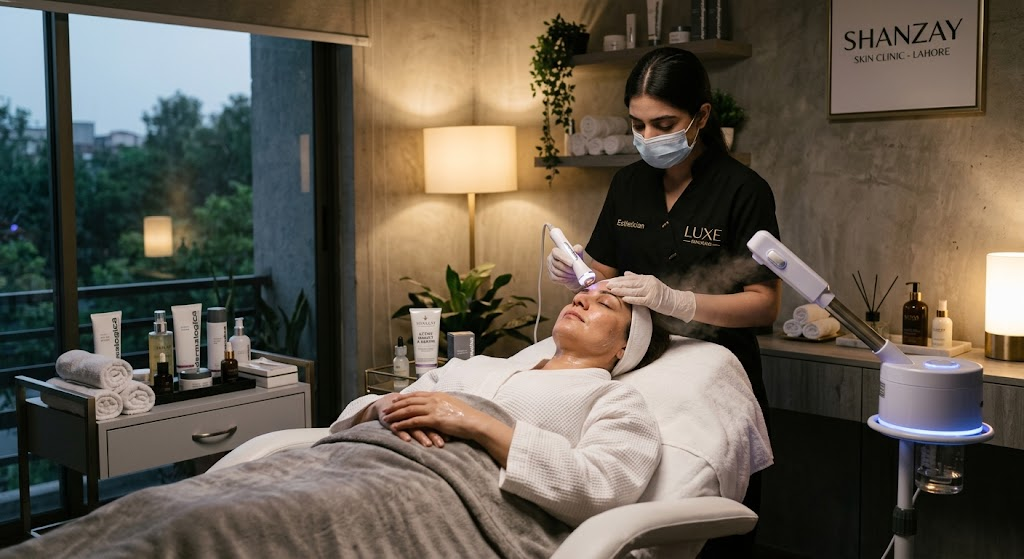
What to Expect From a Professional Beauty Consultation
If you are considering a skincare treatment or product that contains niacinamide, a professional consultation can help clarify what your skin may need.
Depending on the service, you may discuss:
- Your primary skin concern.
- Your current skincare products.
- Previous sensitivity or reactions.
- Your desired result.
- Suitable skincare or salon options.
- Aftercare and maintenance.
The exact process depends on the service selected. It is important for a salon to avoid promising identical results for every client because skin characteristics and responses vary.
Internal-link opportunity: If Shanzay Beauty Salon has a dedicated niacinamide, facial, skincare, or related product/service page, this section is a natural place to link to it using descriptive anchor text such as “explore our professional skincare service” rather than repeatedly using the exact-match keyword.
Practical Tips for Getting the Most From a Niacinamide Routine
For a simple and consistent approach:
- Start with a product appropriate for your skin type.
- Follow the manufacturer’s directions.
- Avoid adding several new active ingredients simultaneously.
- Keep your skin moisturized.
- Use sunscreen during the day.
- Give your routine enough time to assess how your skin responds.
- Stop using a product if you experience significant irritation.
- Seek professional advice for persistent or concerning skin problems.
If you are visiting a beauty salon, tell the professional about products and treatments you are already using. This can help avoid unnecessary overlap between home skincare and professional services.
Frequently Asked Questions
What are the main niacinamide uses for skin?
Common cosmetic uses include supporting the skin barrier, improving the appearance of uneven skin tone, helping manage excess oil, and improving the appearance of texture and some signs of aging. Research has also explored its role in acne-prone skin.
Is niacinamide good for oily skin?
It may be useful for oily or combination skin because topical nicotinamide has been studied for reducing facial sebum production. However, individual responses vary, and oily skin still needs appropriate hydration.
Can niacinamide help with dark spots?
Topical niacinamide has been studied for hyperpigmentation and uneven skin tone, with some clinical research showing improvements in the appearance of pigmented spots. Results vary, and persistent pigmentation may require professional assessment.
Can niacinamide be used on acne-prone skin?
Niacinamide may be useful as part of a skincare routine for acne-prone skin because of its anti-inflammatory properties and potential effects on sebum. However, evidence is still limited compared with established acne treatments, particularly for more significant acne.
Can I use niacinamide every day?
Many people tolerate topical niacinamide well with regular use. The appropriate frequency depends on the specific formulation and your skin’s tolerance. Follow the product instructions and introduce new products gradually if your skin is sensitive.
Does niacinamide brighten skin?
Niacinamide may improve the appearance of uneven pigmentation and overall skin tone. It should not be viewed as a guaranteed skin-whitening ingredient. Its cosmetic role is better described as supporting a more even-looking complexion.
Is niacinamide suitable for sensitive skin?
Niacinamide is generally considered well tolerated, but sensitive skin can react to any cosmetic product. A gradual introduction and patch testing when appropriate can be sensible. Persistent irritation should be discussed with a qualified professional.
How long does niacinamide take to show results?
The timeframe depends on the product, concentration, concern being addressed, and individual skin. Clinical studies have reported measurable cosmetic improvements over several weeks, rather than immediately. Consistent use is generally more meaningful than expecting overnight changes.
Conclusion
Understanding the niacinamide uses for skin can help you make more informed skincare choices. This versatile form of vitamin B3 has been studied for supporting the skin barrier, improving the appearance of pigmentation and uneven tone, managing excess oil, and addressing visible signs of aging. Research also suggests potential value for acne-prone skin, although it should not automatically replace established medical acne treatments.
For women in Lahore, the best skincare approach is one that considers individual skin type, existing products, lifestyle, and specific concerns rather than simply following trends. If you are considering a professional skincare service at Shanzay Beauty Salon, use the appropriate service or product page to learn more about the available option and discuss your individual needs before treatment.